Dienstag, 20. Februar 2024

Charlie Kaufmans Mindgame Movies on CINEGEEK.DE 


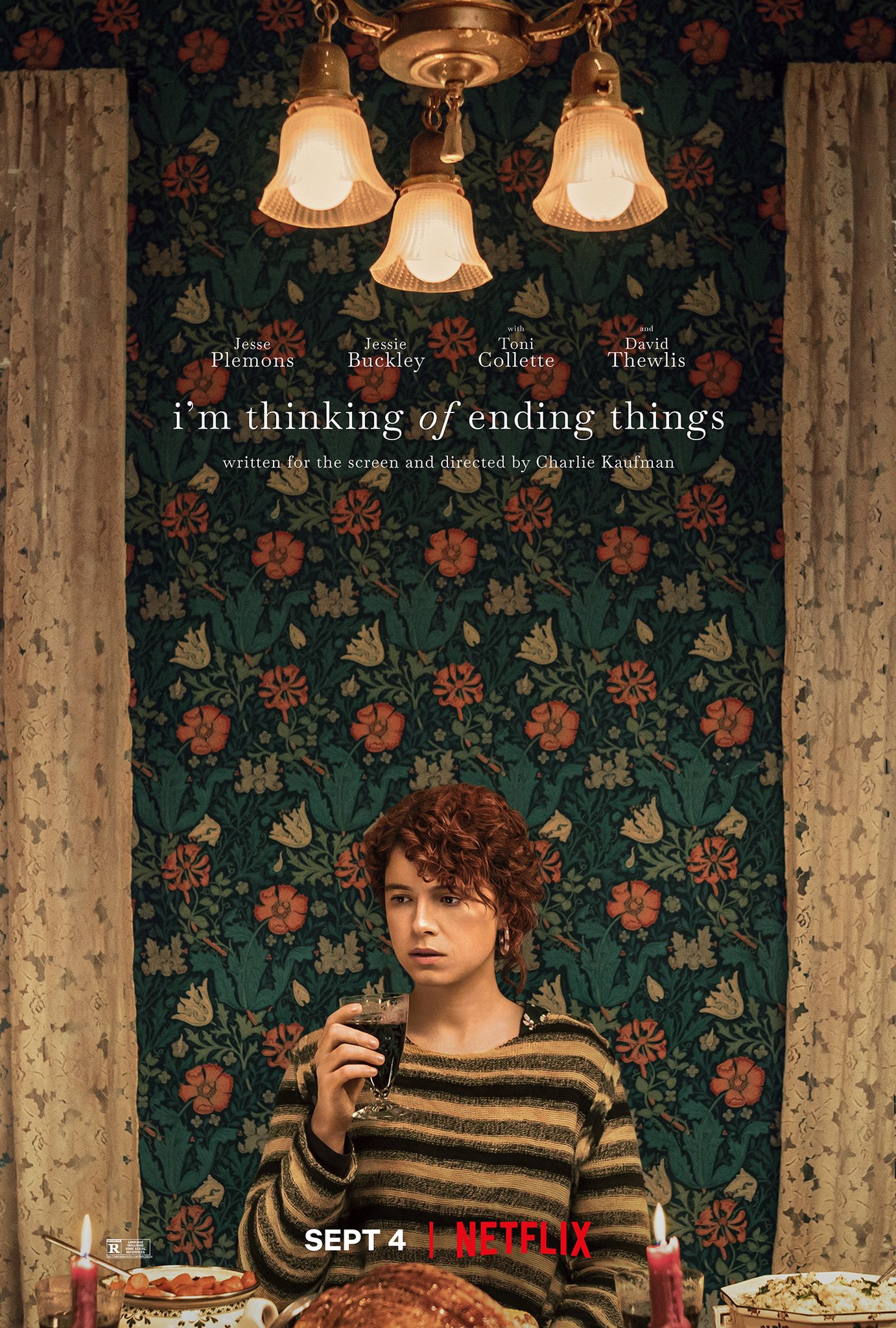
Charlie Kaufman ist der Erfinder unter den Drehbuch-Autoren! In diesem, seinem ersten grossen Erfolg, liefert er eine endlose Reihe solcher Erfindungen wie verruchter Paradoxien und überraschender Wendungen. Ganz listig und langsam - ohne billige Effekthascherei

Donnerstag, 15. Februar 2024

FREE ON CINEGEEK.DE  


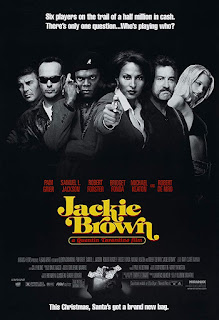
Ordell thinks long and hard. The camera lets him, just holds on to it. "It's Jackie Brown!" Odell is right. It was Jackie Brown who stole the $500,000. It's unusual that a black gun dealer in the movie even gets the chance to think. With Tarantino, however, things are quite different. He has filmed the novel of the same name by Elmore Leonard, in which all the protagonists are clever. A question of survival, the smartest one will make it. Jackie (Pam Grier) knows that she has to look naïve in order to survive. Ordell (Samuel L. Jackson) would kill her immediately. She's cunning, like everyone else in Tarantino's movie. The bail bondsman (Robert Forster), the AFT agent (Michael Keaton) - they all know what happens. Just ask if they're fast enough to keep up with Jackie. With Jackie Brown, Quentin Tarantino not only proved that he was more than a hype! His third film remains his best! Never again did he arrange such perfect scenes as those between the constantly stoned ex-Con (Robert de Niro) and Ordell's lover (Bridget Fonda) discussing a photo in Ordell's booth. Never again did Tarantino stage such a precise production! Although mistakes in suitcases have been popular since the 60s, it's not the plot that convinces here. It's the structure of the film. Jackie Brown, 44 years old, works for the worst airline as a stewardess. She also smuggles money for Ordell. Then Beaumont (Chris Tucker) is caught and the AFT (personified by Michael Keaton) is on her heels. She is arrested. But Ordell sends the bail bondsman Max Cherry (Robert Forster) to buy her out. Here begins the great love story, the heart of the film. Slowly the affection between the two grows (in a worse movie a sex scene would have spoiled everything). Jackie fears to be murdered by Ordell. She has to kill him first, but she's not a killer. In Gunde Max knows that Jackie is using him. Nevertheless, her feelings are real. Jackie is helpless. She can't help it. We get to know all these characters (and in most thrillers they just get to know each other). I think the fact that Tarantino lets us participate in his characters makes the difference! That's what makes his movies "cult movies". Tarantino's strengths are his dialogues and his timing. And of course his casting! Pam Grier, the sex bomb of the Blaxploitation cinema of the 70s, seems tired and desperate here. It still attracts everyone's attention, but Jackie knows life. Robert Forster as a security agent plays the role of his life! A quietly working professional and a sensitive, melancholic lover. Samuel L. Jackson seems even colder and more dangerous than ever before and Robert de Niro can be simply stupid. One of the best is the almost invisible performance of Bridget Fonda, who is only interested in one thing: being high. At the time, some people said Jackie Brown was too long. They're just the ones who can't cope with old-fashioned movies. On the other hand, I wish Tarantino's characters would talk to each other, cheat and live much longer.
Mittwoch, 24. Januar 2024

Deutschland im Herbst 


In 1977, the end of the Republic was believed. The RAF terror reached its unique climax and therefore the German filmmakers of the New German Cinema also tried to take a stand. Germany in autumn is more than just a film. It is a document of the times. It begins with the (state) funeral service for the president of the employer Hanns-Martin Schleyer. Murdered by the RAF. Revenge for the suicides in Stammheim. 

Montag, 8. Januar 2024

FREE ON CINEGEEK.DE Alejandro Jodorowsky - The Holy Mountain  


If he looks back today, I think he'll be able to say he did anything. His name is Alejandro Jodorowsky. He went around with a circus, drew comics, worked with the greatest surrealists and made movies. He's not organized, he makes the kind of movies that Hollywood shouldn't make anymore. Not because of the success, but because he has to! Jodorowsky is a driven one! Holy Mountain resembles an explosion of images, filmed with burning intensity, so they will be remembered forever! A thief climbs the high tower and meets the alchemist at the top of the rainbow room. The alchemist has gathered a kind of sect around him to set off for the holy mountain to become gods there. It was John_Lennon who convinced his manager Allen Klein to support Jodorovsky's film financially. It was a fatal deal because Jodorowsky lost control of his work. But Jodorowsky used only half of the budget and returned the second part! It is said that he had lived with the crew in a commune, taken LSD and been looked after by a Zen master. The film begins in a white room that looks like a mosaic. The alchemist (Jodorowsky himself) in a black coat and two women kneeling are present. He shaves their heads and the opening credits begin. Then we see a gang of little boys with green genitals throwing stones at a tied man (Jesus?). In the first part the characters are introduced episodically, while in the second part the journey to the holy mountain follows. The first part looks like a walk through a colorful, explosive labyrinth, the second part seems almost contemplative. Finally we are awakened from our dream by Jodorowsky. Unfortunately, because we would have liked to sleep even more!

Sonntag, 31. Dezember 2023

FREE ON CINEGEEK.DE Vittorio de Sica - Miracle In Milan 


Vittorio De Sica firmly believed that everyone could play a role: Himself. He worked closely with screenwriter Cesare Zavattini, a member of the Italian Communist Party. Both found inspiration in post-war Italy, a time of poverty and deprivation. The stories were within their grasp, virtually on the street. De Sica, born in 1902, was a good-looking man, a sought-after beau on the big screen. His first directorial works were light comedies, similar to the comedies in which he himself appeared as an actor. Perhaps it was the harsh reality of the Second World War that shattered the optimism necessary for such stories? And so in 1942 he directed The Children Are Watching (DVD5617), which followed shortly after Visconti's Ossessione (DVD7176), which many consider to be the first neo-realist feature film. At least that's what this type of film was called, although there were already films in the silent film era that took a bold and unvarnished look at everyday life. In any case, De Sica shot the film with real people and not actors. An astonishing effect for audiences who were used to Hollywood glamour! I remember a video evening at our local video shop. We were watching Umberto D. (DVD1316) and my friend Anisa had tears in her eyes. She was still crying long after the film had finished. People who don't cry and empathise with Umberto D. - I doubt whether they can empathise at all! Neorealism was a term that could mean many things. It refers to films that are set in the working class and show the poverty of the people. Implicit in them is the message that a better life is possible! They are works of art, not cold and smooth like those from Hollywood. They are works of art that recognise the feeling of confusion. The coincidence that is inherent in everything we experience. Miracle In Milan is in this tradition and yet seems much more cheerful. Who knows, maybe some early American films with their sly, compassionate humour were the inspiration? Whereas de Sica's previous neo-realist works were as hopeless as they were heartbreaking, here we find ourselves almost in a comedy with fantasy elements! Until then, de Sica used human humiliation for tragic material, this time to show the irony of life. In the form of a fairy tale. It is about how we humans live in dreams full of self-deception. A fairy tale that teaches us to be cheerful, to improve our sense of community - and to trust the owners of the land on which we live only until they strike oil...


Samstag, 23. Dezember 2023

FREE ON CINEGEEK.DE Alain Resnais - Last Year In Marienbad 


I can still see it right in front of my eyes as I stood in line at the Schlüter cinema in Schlüter Strasse to watch Alain Resnais' classic. We had to wait in line, in the evening just before ten and it drizzled a bit. Or did I see the same movie last year? It's easy to blaspheme about Last Year At Marienbad. Nevertheless; you watch the film again - it has you back! Does it still exist at all? Students (dressed in black) queuing in the rain in front of the cinema to see Alain Resnais and then discussing the meaning of Last Year At Marienbad for hours? Hoping to find something like truth in art? Alain Resnais has denied his film a higher meaning, but that didn't stop any of his disciples. So when I watch him on DVD today, what awaits me? The higher consecrations of art or something stupid? Is it even more fun to talk about Resnais than to look at him again? Then the first scenes, full of immense beauty. A hypnotic pull, a mysterious puzzle! The plot resembles a secret and the characters don't reveal themselves either. But that's of secondary importance and I never felt the need to guess these puzzles. Who needs a happy ending? Marienbad plays in a chateau with enormous mirrors and paintings. There are endless corridors and magnificent rooms. The guests are elegantly and dearly dressed. "A" (Delphine Seyrig), a beautiful woman. "X" (Giorgio Albertazzi) with the appearance of a movie star who insists that they saw each other last year and agreed to meet again this year in Marienbad. Finally "M" (Sascha Pitoeff) appears. Lover or husband, at least he has power over "A". "M" looks creepy with his deep gaze. He has something of a vampire. "X" tells us the story, while the other protagonists only recite a line of dialogue here and there. In addition, there is the disturbing organ music by Francis Seyrig, which sounds like a requiem. The plan of "A" and "X" was to meet in the sleeping chamber while "M" was playing. But "A" does not remember. She asks "X" to leave her alone. But "X" continues with his memories (or inventions?). He constructs a story for "A" that she doesn't remember. Was there a shooting? A dead man? Was there? No, he corrects himself. It was different after all. We see them in black and white. Dead. Alive. The camera glides, the figures move slowly and solemnly. Last Year At Marienbad claims they met last year (or not), they had an affair (or not), he killed them (or not). Any questions open? I think that's what the '60s were like: the desire to ask questions, while answers to them amount to defeats. Everything about this film is artificial and offers the possibility to observe human behavior with regenerated attention. Could it be that "X" is the "Auteur"? After all, he speaks to us in the second person, as if he speaks to his creatures and shapes their history. Does he create these characters and then let them rule? Anyway, he is extremely involved in the action and desperately tries to convince "A" of his memories. That's why he designs his characters: he can control them. Make them love him. Unfortunately, characters lead a life of their own. And this is exactly the problem. 

Sonntag, 17. Dezember 2023

FREE ON CINEGEEK.DE Virgin Mountain 


The Icelandic Dagur Kari has it with adult men still living with their mother. Fusi (Gunnar Jónsson) is again so one, 43 years old and obese. Fusi only talks about the essentials. He's never had a girlfriend. Fusi's hobby are toy soldiers with whom he recreates historical battles. Basically, he has the soul of a child: Innocent, helpful and nice. Still, he's lonely. Fusi has always been the outsider, the "fat one". In another movie such a character with a preference for heavy metal and war games could also be a dangerous guy. But we must not hesitate to take this human mountain to our hearts. Kari now confronts his hero with a love story. Sjöfn is her name, Fusi puts the hurdles to adulthood in the way. She asks him upstairs for tea, but Fusi replies that he would rather drink milk. It's this unaffectedness that makes Virgin Mountain so humorous. Kagur trusts in his calm comedy tone, in his slightly bizarre characters, who receive our affection with ease. Will Fusi are the sad life that is presented to us in so many different shades of grey and brown? Can he have the love he naturally carries in himself? Will he move out?